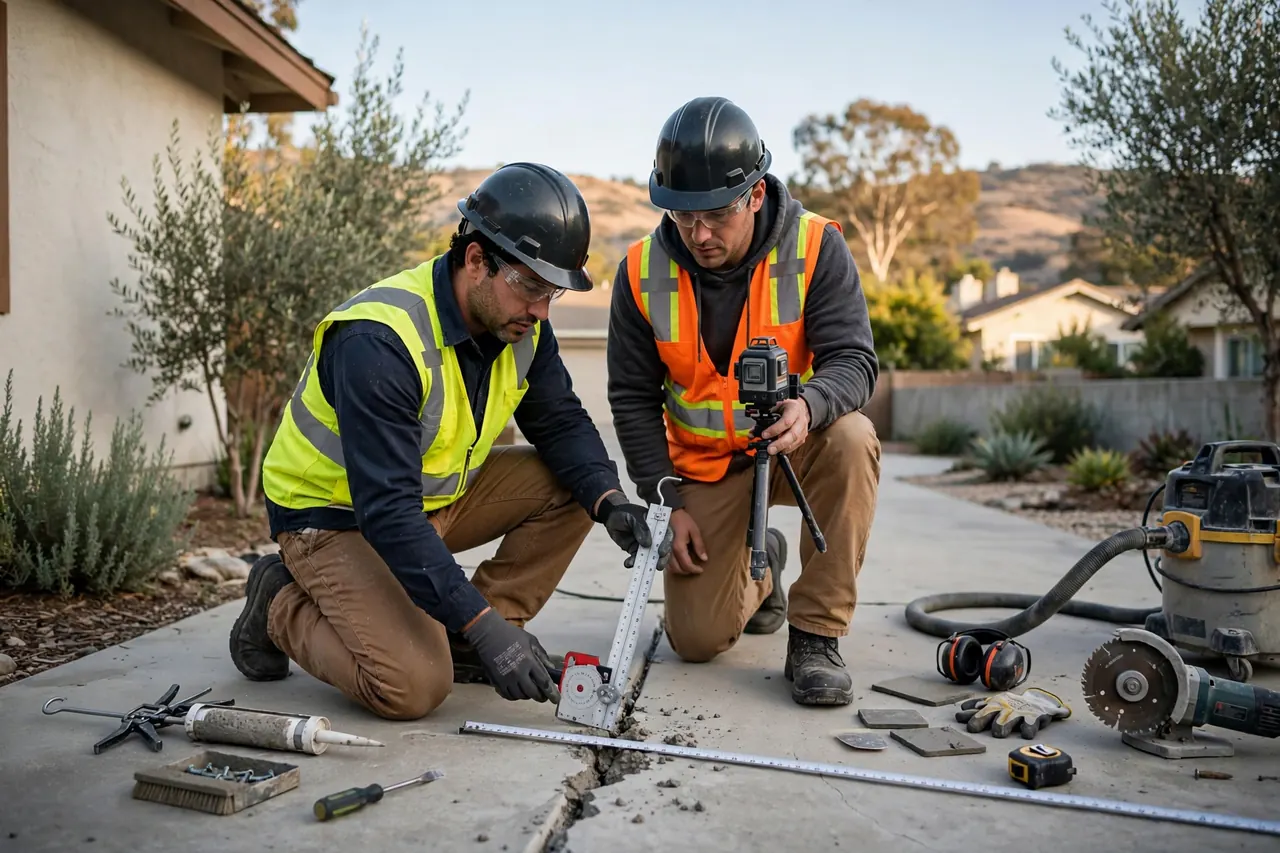
Site Evaluation and Written Estimate
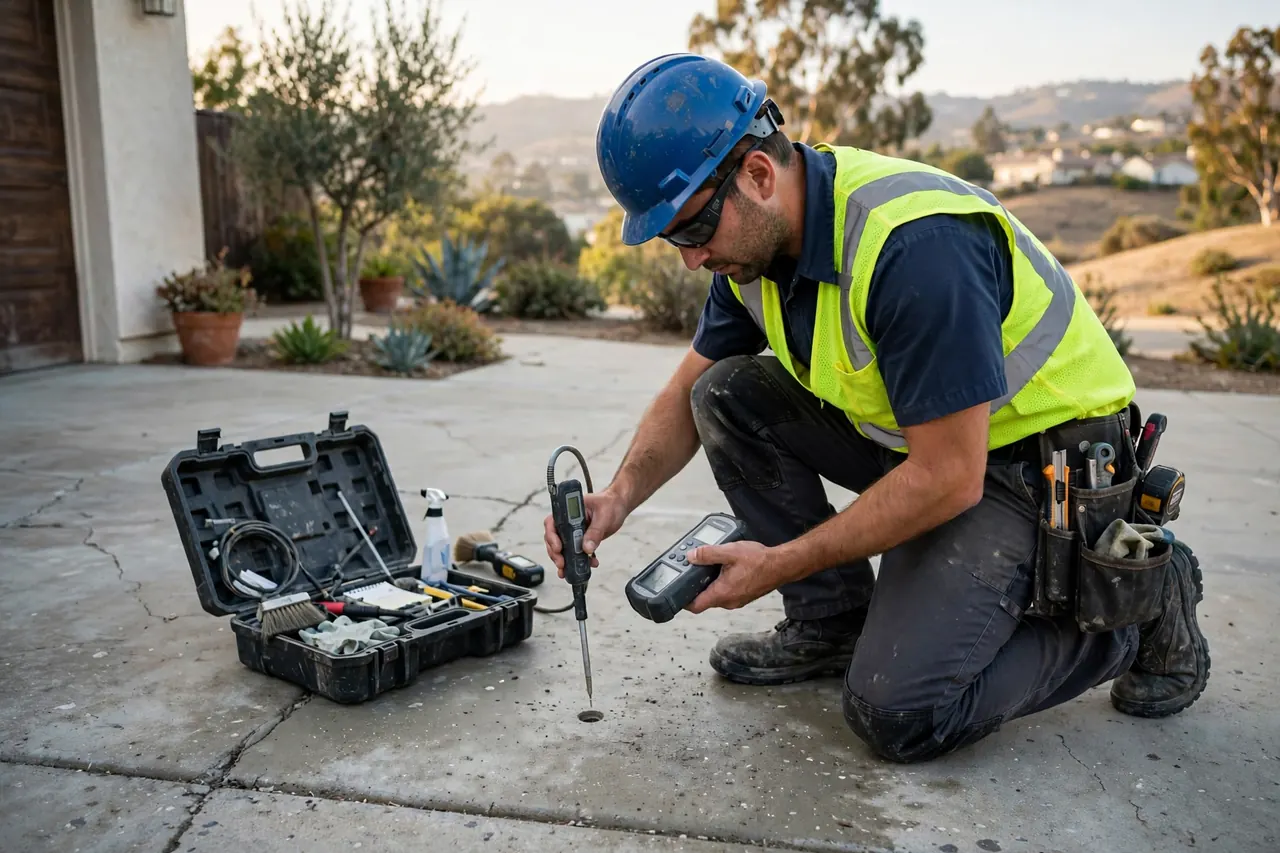
A technician inspects the existing slab, measures slope and drainage, checks soil conditions, and reviews any San Carlos permit needs before providing a detailed written estimate.
Send us your details and we'll get back to you to schedule a time to talk.
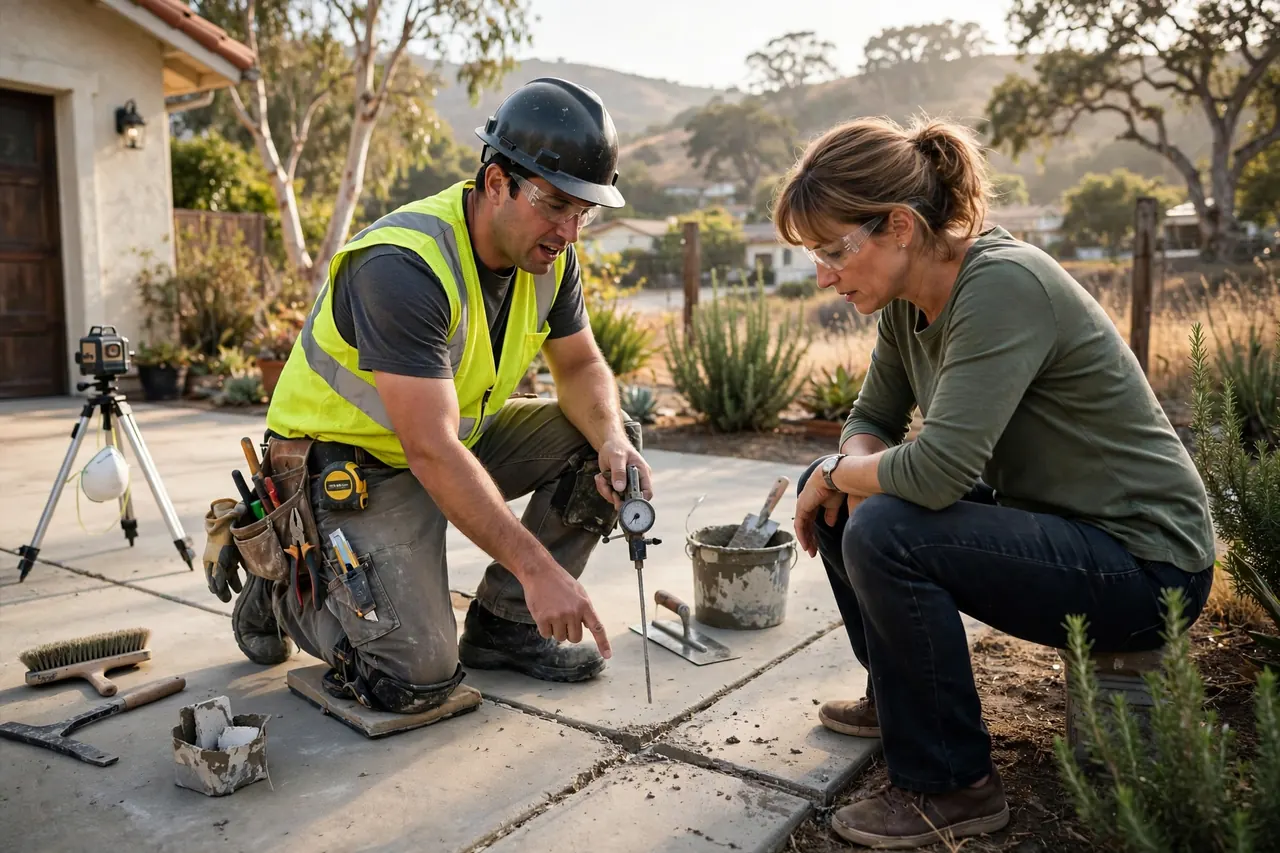
Related Concrete Services
Concrete Driveway Service Overview
Concrete driveway service is the process of evaluating, excavating, forming, and pouring a reinforced concrete slab built to carry vehicle loads, and at San Carlos Concrete Contractors it includes new installations, full replacements, and decorative finishes across San Carlos properties. Every project starts with a site evaluation where trained technicians check slope, drainage patterns, and soil conditions, since the expansive clay common in San Carlos can shift a slab that lacks proper base preparation. Crews then remove old material, grade the subgrade, and compact a crushed aggregate base with plate compactors before setting forms and placing rebar or wire mesh. Sequence matters here. Concrete mix design, typically a 4,000 PSI blend for driveways, is matched to the expected load, and saw-cut control joints are placed at measured intervals to guide natural shrinkage cracking. Finishing options include broom texture for traction, exposed aggregate, and stamped patterns, followed by curing compound and sealing. For 2026, we schedule pours around Peninsula weather to avoid rain and heat that affect curing, serving single-family homes, multi-unit buildings, and commercial lots with the same documented safety practices and a post-job walkthrough.
Call Us On: 650-460-2697// Concrete Driveway Cost Factors //
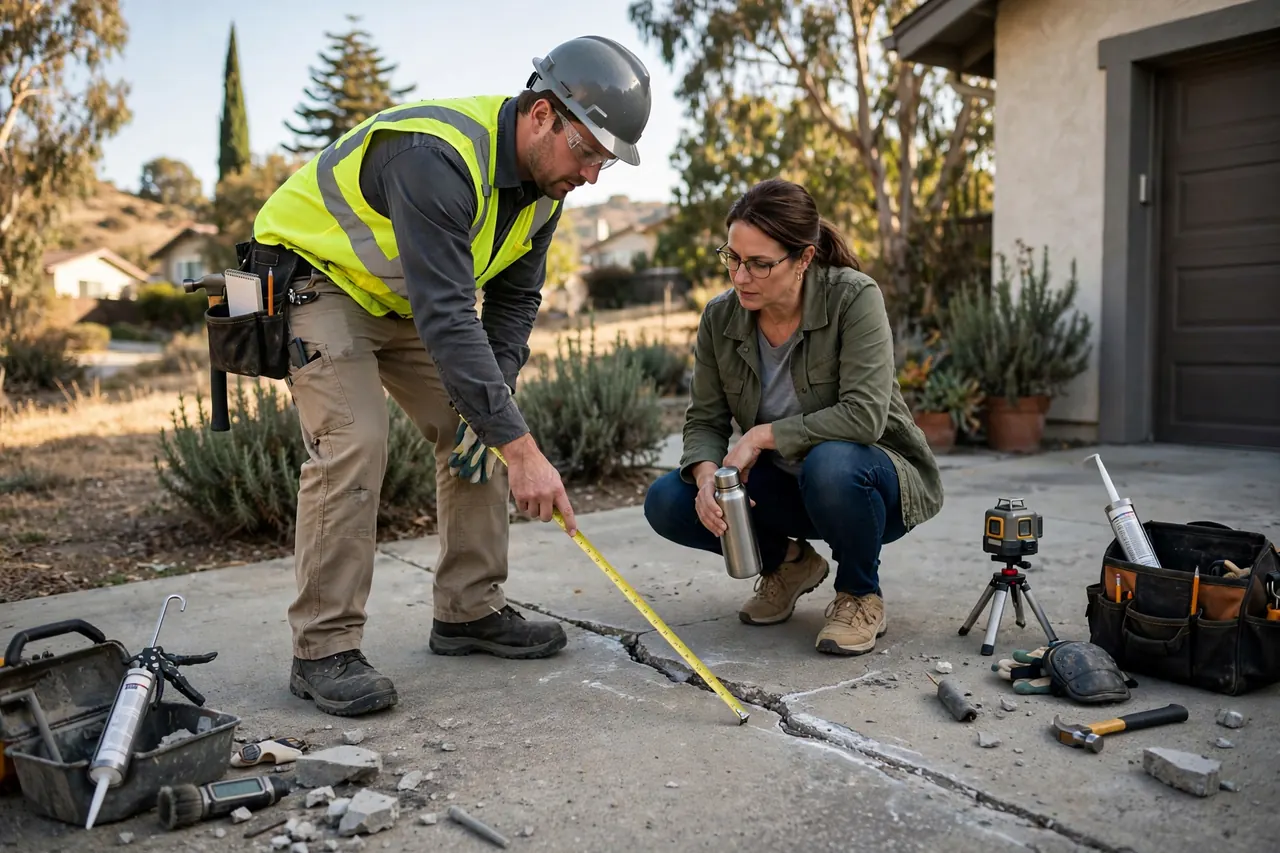
Cracking, settling, surface scaling, and poor drainage are the clearest signs that a San Carlos property needs a new or rebuilt concrete driveway. Many homeowners first notice wide structural cracks that keep growing, or slab sections that have heaved upward from tree root pressure along older streets. Others see differential settlement, where one panel sinks below its neighbor and creates a trip edge near the garage apron. Expansive clay soils in parts of San Carlos swell during winter rains and shrink in dry months. That movement adds up.
Surface problems tell a story too, including spalling, exposed aggregate from worn cream layers, and ponding water caused by a lost slope or failed control joints. Heading into 2026, many hillside and mid-century homes in San Carlos still have driveways poured over thin, poorly compacted subgrade with little or no reinforcement, which explains why patching rarely lasts. A properly engineered concrete driveway, built on a compacted aggregate base with rebar reinforcement, planned control joints, and correct drainage slope, addresses these root causes instead of covering the symptoms.
Request a Driveway Evaluation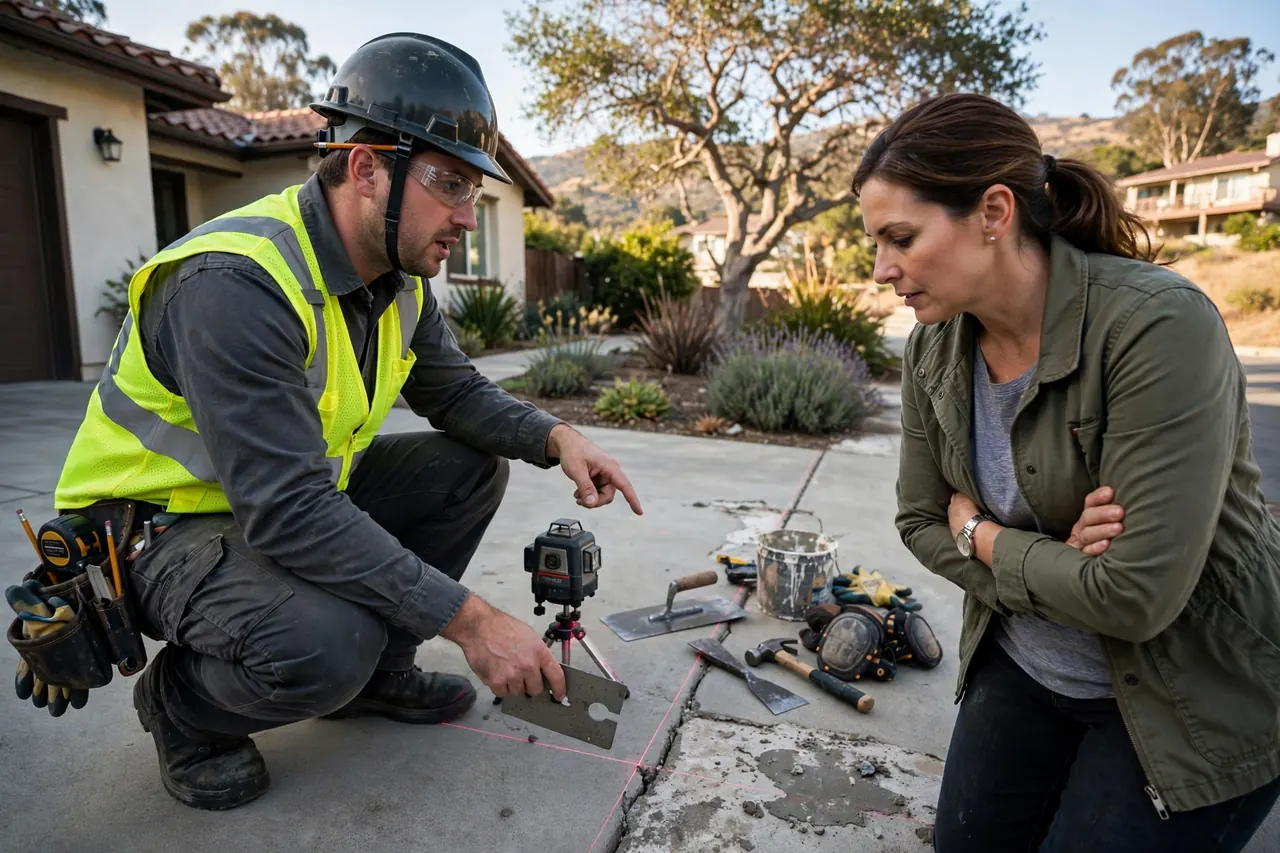
Concrete Driveways Process
Our concrete driveway process follows a four-step sequence of site evaluation, subgrade preparation, placement, and curing with a final walkthrough. In 2026, San Carlos homeowners face clay soils, sloped lots, and city permit requirements, so every project starts with measured grades and a written estimate. Trained crews compact the aggregate base, set forms and rebar, and plan control joints before any concrete arrives. Sequence matters. Each step is checked before the next begins so the finished slab drains correctly and resists cracking.
Schedule Your Site EvaluationA technician inspects the existing slab, measures slope and drainage, checks soil conditions, and reviews any San Carlos permit needs before providing a detailed written estimate.

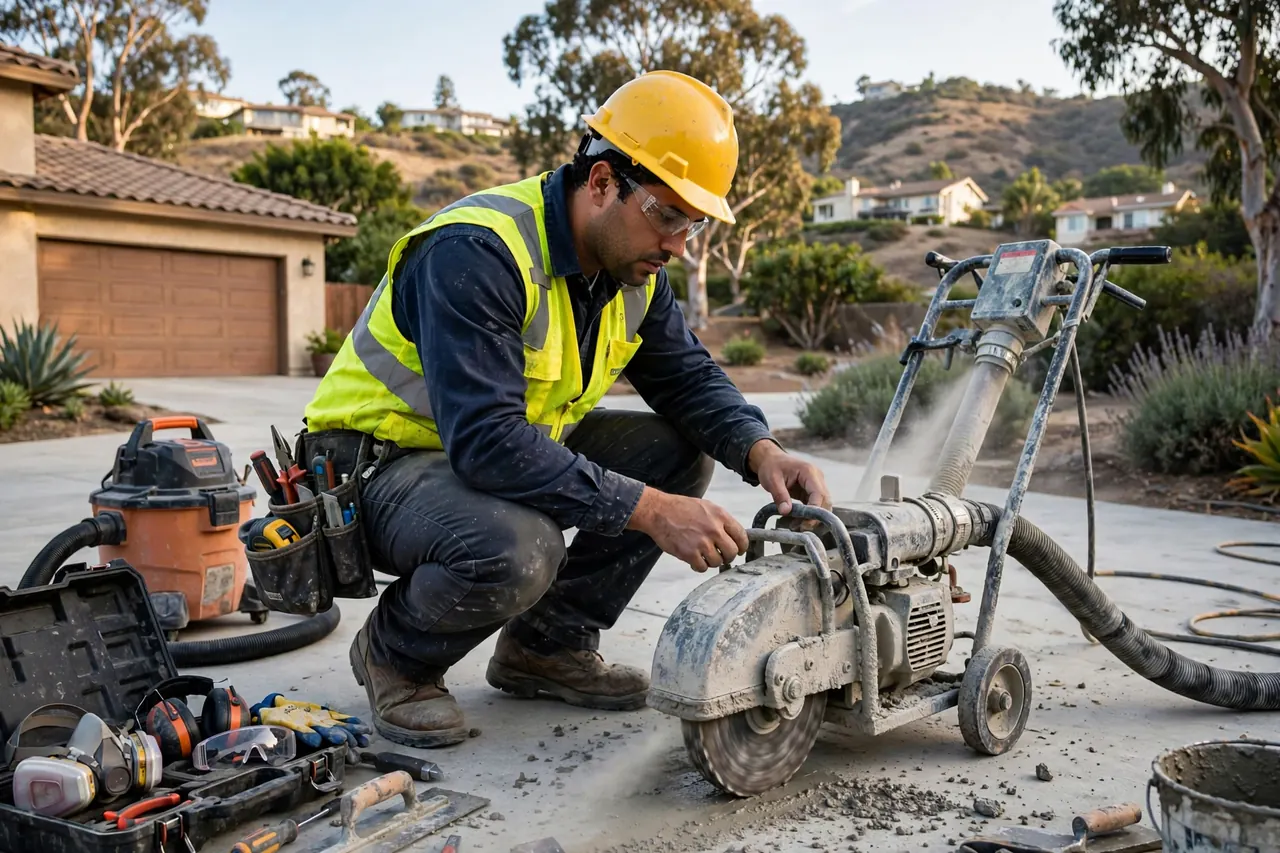
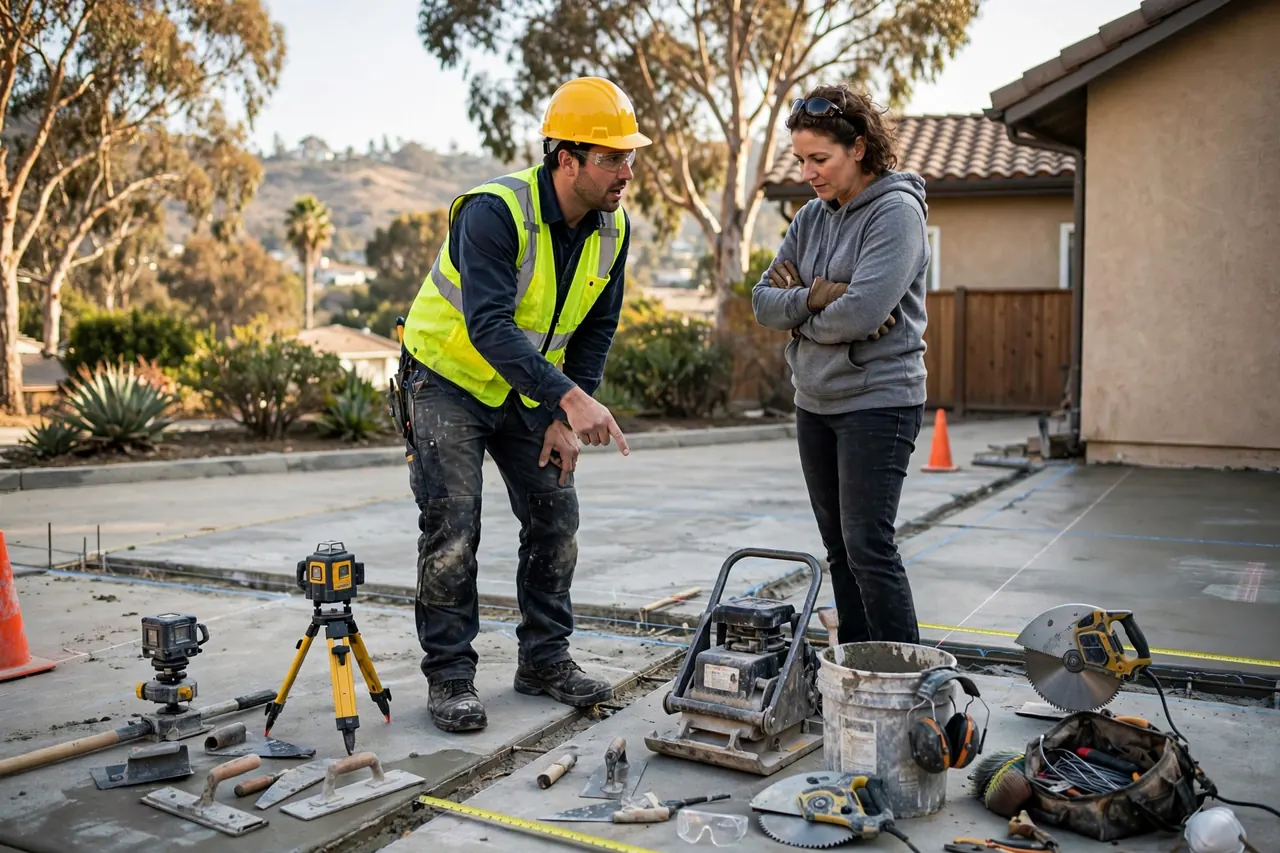
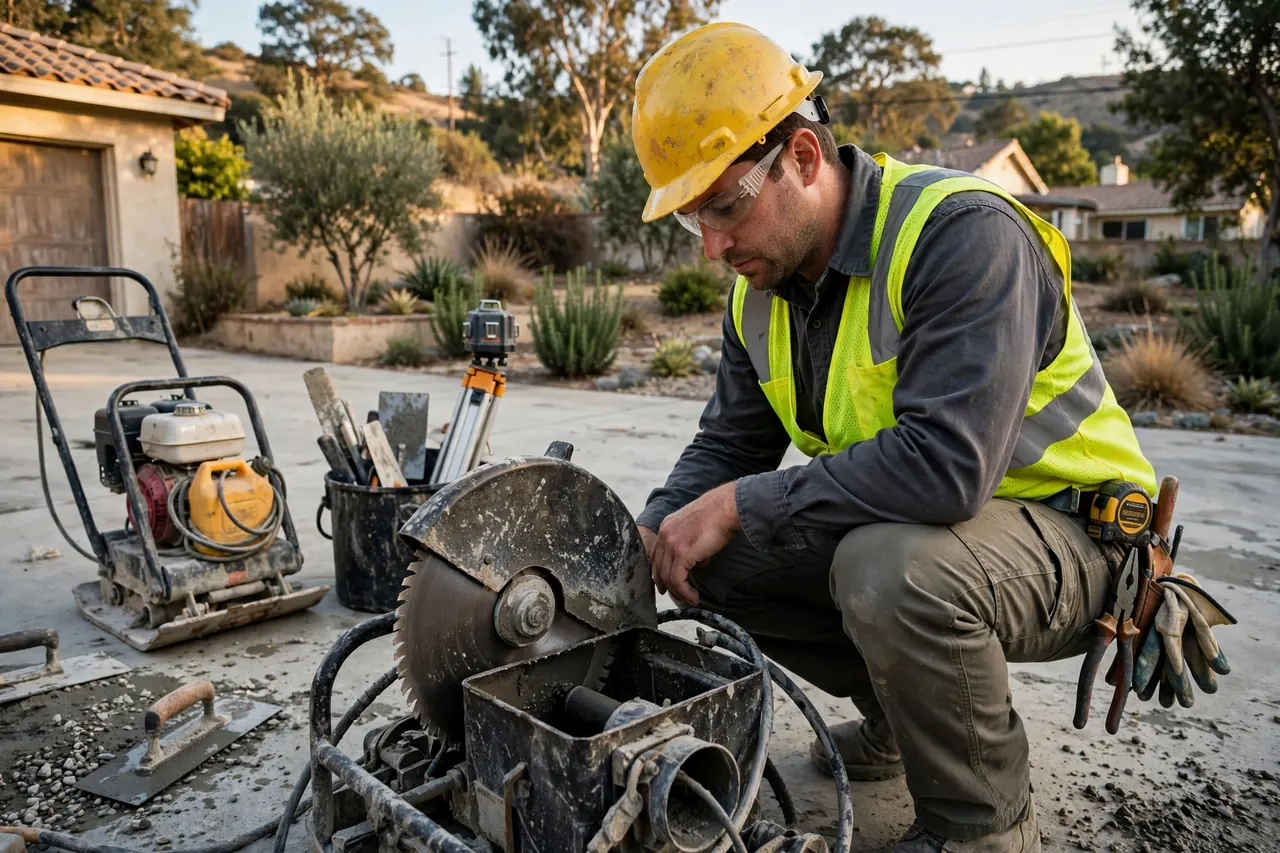
Old concrete is removed and hauled away. The subgrade is graded and a compacted aggregate base is installed with a plate compactor to limit future settlement.

Crews set forms to the planned drainage slope, place rebar on chairs, then pour, screed, float, and finish the concrete with a broom texture or chosen surface.

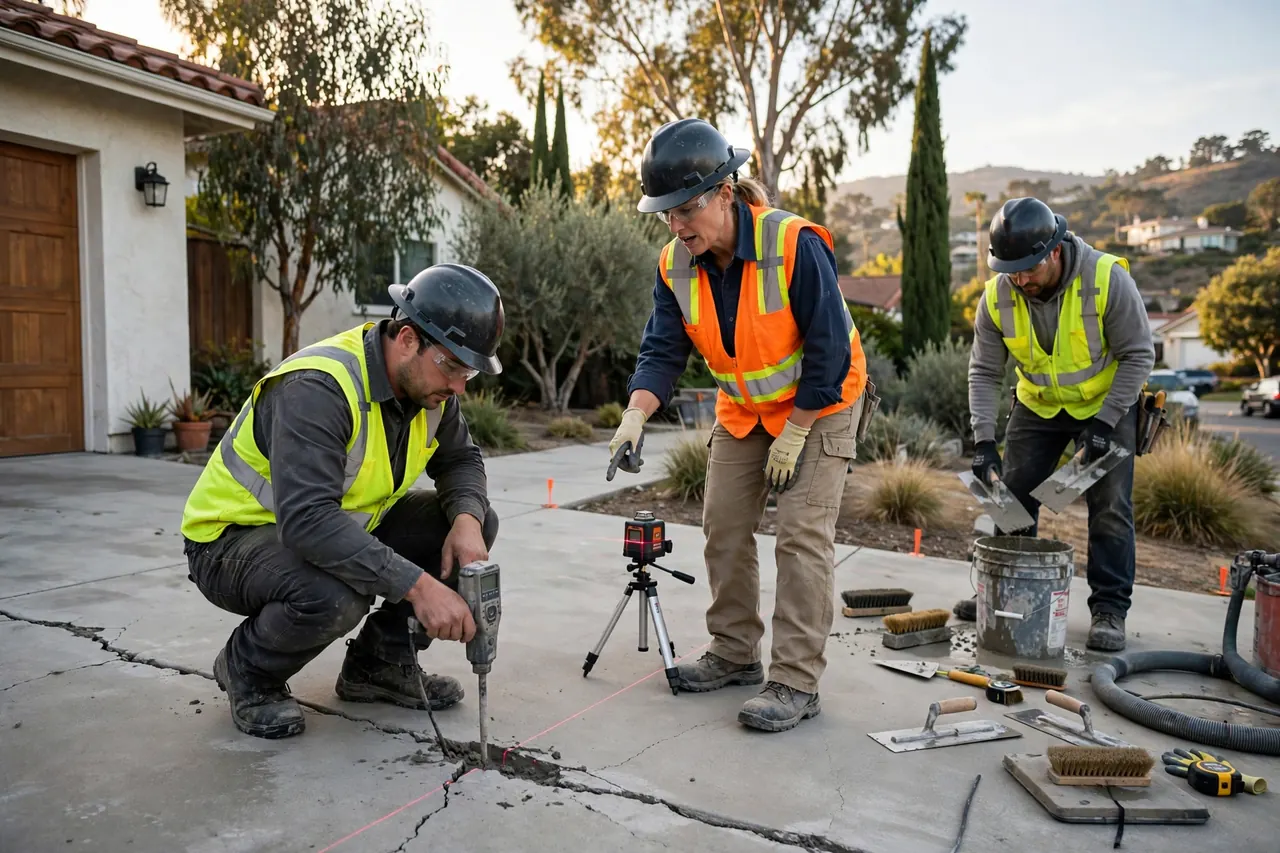
Control joints are cut or tooled, a curing compound is applied, and a post-job walkthrough covers cure times, vehicle use, and long-term sealing care.
Driveway Expertise You Can Verify
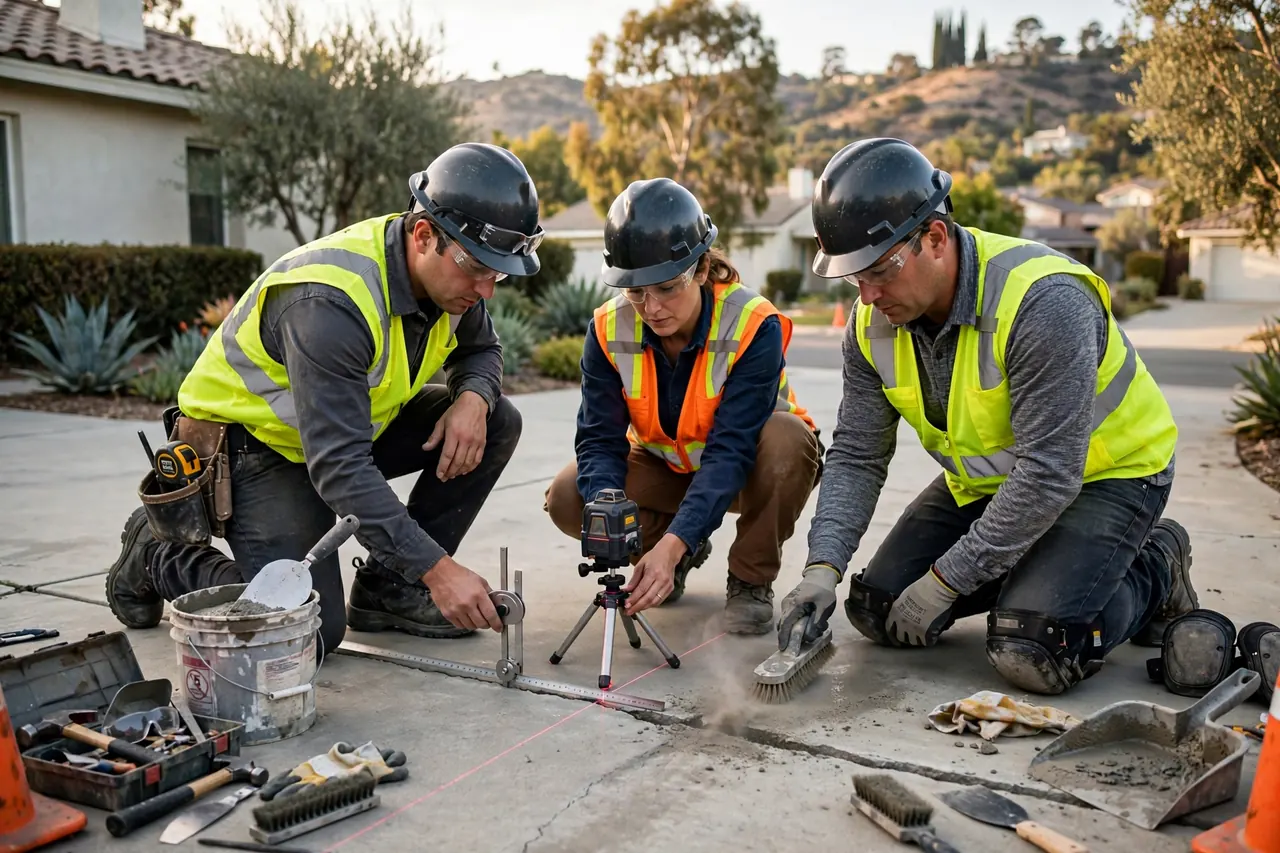
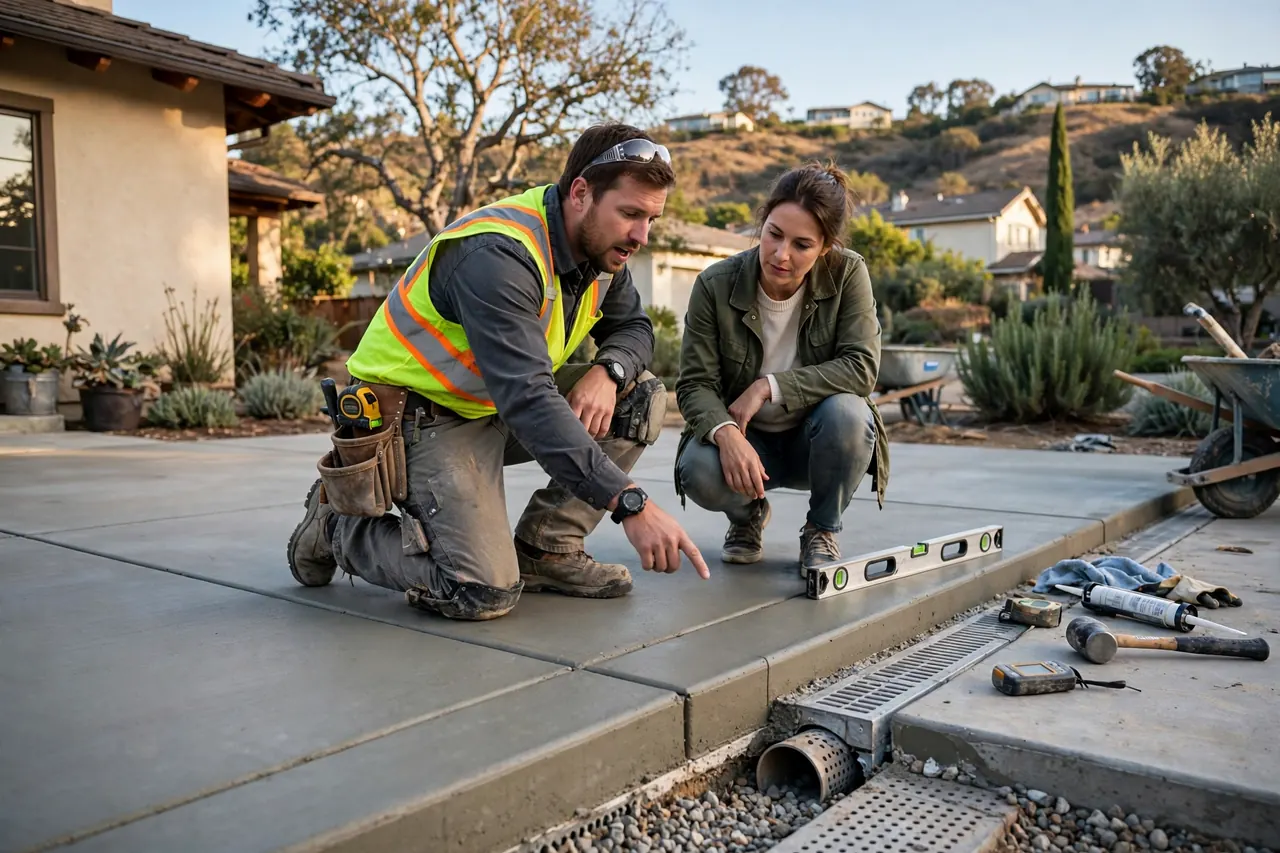
San Carlos homeowners choose our team for concrete driveways because every project follows a documented process covering subgrade evaluation, proper base compaction, reinforcement placement, and controlled finishing. Before any work begins, trained technicians assess soil conditions, slope, and drainage, then provide a written estimate that explains the mix design, slab thickness, and rebar or wire mesh layout planned for your property. On site, crews use plate compactors, laser levels, and screeds to set accurate grades so water drains away from your garage and foundation. Control joints are cut at measured spacing to guide natural shrinkage cracking. That step matters. Throughout the 2026 season, we keep photo documentation of base preparation and reinforcement before the pour, review curing and sealing guidance during a post-job walkthrough, and schedule a follow-up check once the concrete has cured, giving you a clear record of how your driveway was built.
Request a Written EstimateConcrete Driveways FAQs
This section answers the concrete driveway questions San Carlos homeowners ask most often as they plan projects in 2026, from scheduling and preparation to pricing factors and local soil conditions.
Each answer explains how base preparation, reinforcement, and curing affect the result. Clear information helps you make confident decisions about your property.
Most residential concrete driveway replacements take several days of active work, followed by a curing period before you can drive on the slab. The timeline covers demolition, subgrade compaction, forming, reinforcement placement, the pour, and finishing. Your written estimate outlines the expected sequence for your specific project.
A standard concrete driveway installation includes removal of the old surface, grading and base compaction, forming, steel reinforcement, the concrete pour, finishing, and control joint cutting. We also review curing and sealing care during a post-job walkthrough. Decorative finishes like broom texture or exposed aggregate are discussed during the estimate.
Before your driveway is poured, you should move vehicles off the work area and clear access for concrete trucks and equipment. It also helps to mark sprinkler lines or low-voltage lighting near the slab edges. Plan to park elsewhere until the concrete has cured enough to support vehicle weight.
The cost of a concrete driveway in San Carlos in 2026 depends on square footage, slab thickness, demolition needs, slope, reinforcement, and finish type, so pricing is set after an on-site evaluation. Hillside lots or poor subgrade soils may require extra base material or drainage work. You receive a written estimate itemizing these factors before work begins.
Yes, San Carlos soil and hillside conditions directly affect how a concrete driveway should be built. Expansive clay soils common on the Peninsula can shift with seasonal moisture, so proper base compaction, adequate thickness, and steel reinforcement help limit cracking. Sloped lots also need careful grading and drainage planning so runoff moves away from the slab and garage.
// Free Concrete Driveway Estimates //